
Overview
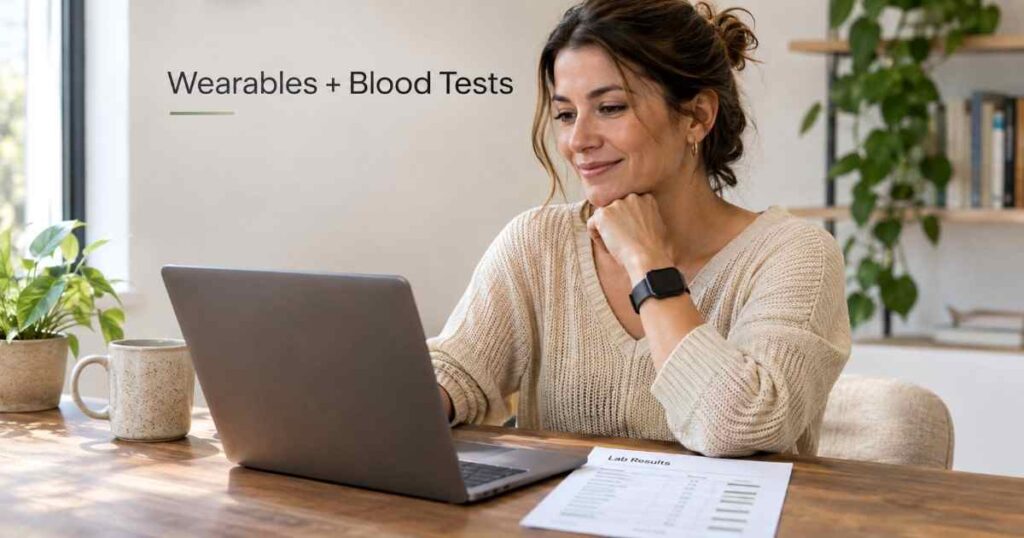
Wearables, such as smart watches, fitness trackers and smart rings allow us to regularly track various health metrics. We can gain insight into our activity levels, sleep, heart rate, and recovery and overall health. However, wearables alone do not give the full picture of what is going on in our bodies.
Blood tests can therefore give us valuable information on other health metrics such as cholesterol, glucose, vitamins, iron levels, thyroid function and more. If we can combine wearable data with blood test data, we could get a more complete picture of health trends.
There are currently many digital health solutions on the market to do this. Some apps can combine laboratory data with data from Apple watches, Oura rings, Fitbits, Garmin devices, and more. Other apps make use of AI to give clarity and insight into health data, as well as identifying trends.
Below is a list of 7 useful apps for combining wearable and blood test data.
1. Vidaya
Vidaya – Longevity AI App allows users to combine various forms of health data to create a clear picture of their health.
A useful feature of this app is that blood tests can be analysed using AI. Existing blood test results can be uploaded and the app will show information relating to different biomarkers. It can provide an easy interpretation of each result.
Vidaya can also be combined with wearable data. If compatible devices are connected, data from activity, sleep and other health measurements can be viewed in conjunction with biomarkers. In addition, DNA insights as well as body composition insights are provided.
Finally, the app gives a VAI health score to give users an overall summary of their health. The app also has an AI chatbot (Vaya Chat) to provide users with an easy way to interact with their health data and ask questions.
Key Features
- AI analysis of blood tests
- Wearable data integration
- View trends in biomarkers
- Insights from DNA and Body Composition
- VAI health score
Who it’s best for
Those with existing blood tests and wearables looking to get a clear picture from their data.
Limitations
The insight from data in this app will depend on the quality and availability of data uploaded.
2. InsideTracker
InsideTracker is a health and performance tool. It focusses on helping individuals improve their health by combining biomarker data, lifestyle data, and tailored suggestions. This would appeal to those interested in fitness, and healthy ageing.
Existing blood test results can be uploaded, or tests can be carried out using the service. Based on biomarkers in the blood, and personal data, suggestions can be given.
Wearable data can be integrated with this app (Apple Health, Fitbit, and Oura). Therefore, activity, sleep, heart rate and other physiological data can be added to a user’s health profile.
Combining data from wearable devices and blood tests can give insights into how lifestyle factors and activity levels affect blood test results over time.
Key Features
- Upload existing blood test data
- Biomarker analysis
- Integrations with Apple Health, Fitbit and Oura
- Tailored health and nutrition suggestions
- Long term health data
Who it’s best for
Those interested in fitness, and tracking biomarker data in relation to activity and recovery.
Limitations
Some tests and features must be purchased as part of a premium version of the app.
3. Function Health
Function Health is a digital health platform which focusses mainly on giving extensive laboratory tests. This is perfect for those wanting to gain wider insight into their health by regularly testing biomarkers.
Users can perform over 160 different tests relating to metabolic health, cardiovascular health, hormone levels, thyroid health, and nutrition.
In addition, previous medical data can be uploaded. Compatible wearables can also be connected via Apple Health, or other compatible integrations. Therefore, laboratory data can be compared to activity, sleep, and daily health habits.
AI assistance and tailored health plans are also provided. This can help users understand their reports, and identify what areas they may wish to speak to a healthcare professional about.
Key Features
- Extensive lab tests
- Over 160 tests included in subscription
- Ability to upload previous medical data
- Wearable data integration
- AI health insights and tailored health plans
Who it’s best for
Those interested in comprehensive lab testing with digital health tracking.
Limitations
As this app relies heavily on lab testing, it may be more expensive than apps focusing on organising existing lab data.
4. Superpower
Superpower combines lab tests, wearable data, medical data, and AI powered insights to give users insight into multiple aspects of their health, all in one place.
The lab tests available cover over 100 biomarkers. These tests can give insight into heart health, metabolism, hormone levels, nutrients, and inflammation.
Existing lab tests can be uploaded. Compatible wearables (Oura, WHOOP, Apple Health) can also be connected. Therefore, lifestyle and activity data can be considered in conjunction with lab data.
Another useful feature of this app is its AI assistant (Kin). With consideration of existing health data, this assistant can provide insights, answer questions, and put recommendations into context. In addition, the service allows you to speak to clinicians if professional advice is needed.
Key Features
- Lab tests (over 100 biomarkers)
- Wearable data integration
- Upload existing lab data
- AI health insights
- Professional assistance and tailored health plans
Who it’s best for
Those wishing to perform lab tests, combine with wearable data, and gain AI assisted insights from health data.
Limitations
This app operates on a subscription basis meaning it may not be suitable for users requiring a simple lab data tracker.
5. Heads Up Health
Heads Up Health is a connected health platform. It combines wearable data, lab data, health devices, and other data to give a centralised health summary.
Popular wearable integration options include Apple Health, Oura Ring, Fitbit, Garmin Connect, and Withings. It can also integrate with continuous glucose monitoring devices and other health devices.
A useful feature of this app is lab data management. By uploading PDF lab data, a chart and timeline can be created. This makes it easy to see trends in different biomarkers, rather than comparing individual reports manually.
Furthermore, this app is designed to be used by health practitioners, and therefore can be very useful for both individuals and professionals in monitoring health data from multiple sources.
Key Features
- Multiple wearable device integration
- Lab data upload
- Trends in biomarkers (charts and timelines)
- Glucose and lifestyle tracking
- Health dashboards for practitioners and patients
Who it’s best for
Individuals and health professionals looking to centralise health data from multiple sources.
Limitations
Some features and functions are more suited to health practitioners. Individual users should confirm their needs are met by the appropriate plan.
6. SiPhox Health
SiPhox Health allows for easy lab testing and biomarker tracking, by allowing testing to be performed from home.
This can be very useful if you just want to track certain biomarkers. Depending on your chosen tests and location, you can collect samples from home. Lab results can then be viewed in the app.
The app also allow connections to wearable data and other health data. This means biomarker data can be compared with activity and lifestyle data.
This app is particularly interesting for those wishing to track health measurements in a consistent way.
Key Features
- Home lab testing
- Biomarker tracking
- Easy access to lab data
- Wearable/health data integration
- Tracking health trends
Who it’s best for
Those wishing to perform easy home testing, and track changes in biomarkers.
Limitations
Depending on your location and package, some tests, data and services may not be available.
7. OneTwenty
OneTwenty is a good option to combine lab data with wearable data and view health trends.
Rather than viewing lab tests individually, this app allows a long term view of health data. Lab results can be organised, trends in biomarkers can be viewed, and compatible devices can be connected.
Wearable devices such as Oura and Withings can be connected. Additional connections can be made via compatible health platforms. Therefore daily activity and other health data can be combined into the general health tracking.
If you’re interested in preventative healthcare, having historical health data organised can allow you to easily identify changes in the data, and ask informed questions during medical appointments.
Key Features
- Track lab test results
- Long-term biomarker tracking
- Wearable data integration
- Centralised health data
- Long term health progression
Who it’s best for
Those wanting to consistently track lab and wearable health data.
Limitations
Check what devices, tests and subscriptions are available in this app.
Choosing the Right App
Each app will vary in functionality. Some apps focusing on performing lab tests, whilst others allow organisation of existing medical data and wearable data.
Consider the following factors when choosing an app:
- Wearables: Does the app include integration with your current wearables? (Apple Watch, Fitbit, Garmin, Oura, WHOOP).
- Lab data upload: Can you upload existing lab data from external sources?
- Biomarker tracking: Charts can allow easier comparison of multiple test results.
- Privacy: Check the privacy policy, what data is stored, what data can be shared, and security.
- User friendly: Ensure technical health data is easy to understand.
- Medical Advice: Check whether recommendations are educational, AI generated, or assessed by qualified healthcare professionals.
Finally, decide whether you need an app offering fresh lab tests, or simply organisation of existing data.
Conclusion
Combining wearable data with lab tests can be very informative. Wearables can give regular data on activity, sleep, and recovery, whilst lab tests give insight from biomarkers. Several apps exist which combine these, and the best choice depends on if you want to analyse existing lab data, want comprehensive testing, wearable integration, or long-term health tracking.
These apps should not be used as an alternative to medical advice, diagnosis, or treatment. Always consider your medical history, symptoms, and speak to a healthcare professional to properly interpret lab results.