
A few years ago, using AI as a developer usually meant asking ChatGPT to explain an error or letting GitHub Copilot finish a function. In 2026, that description already feels outdated.
AI is beginning to participate in almost every stage of software development. It can inspect repositories, plan changes across multiple files, generate tests, review code, debug failures and increasingly take actions through coding agents. Outside the IDE, the same shift is reaching deployment, infrastructure and production operations.
The adoption numbers explain why this matters. HackerRank’s 2025 Developer Skills Report found that 97% of surveyed developers use at least one AI assistant, while developers estimated that AI generates an average of 29% of their code.
JetBrains’ 2025 Developer Ecosystem Survey, which included 24,534 developers across 194 countries and regions, found that 85% regularly use AI tools for coding and development.
But the interesting story in 2026 isn’t simply that more developers use AI. It’s that the relationship between the developer and the AI is changing. We are moving from AI that answers questions to AI that performs work.
That shift is already changing what individual developers can build. Indie developers and small teams can now prototype products at a speed that would have required considerably more time and people only a few years ago. We’ve previously looked at how indie developers and solo founders are using AI to launch products much faster, but the same transformation is now reaching professional engineering workflows.
Here are the AI trends developers should pay closest attention to in 2026.
Trend 1: Coding Assistants Are Becoming Coding Agents
The first major change is happening inside the development environment itself. Traditional coding assistants operate reactively. You start writing code and they suggest the next few lines. You ask a question and they provide an answer. You paste an error and they suggest a possible fix.
Coding agents work differently.
Instead of asking an agent to write a function, you can give it a broader objective such as add authentication to this application. The agent can inspect the repository, identify the relevant files, plan the implementation, modify multiple parts of the codebase, run tests and iterate when something fails. That changes the unit of work being delegated to AI.
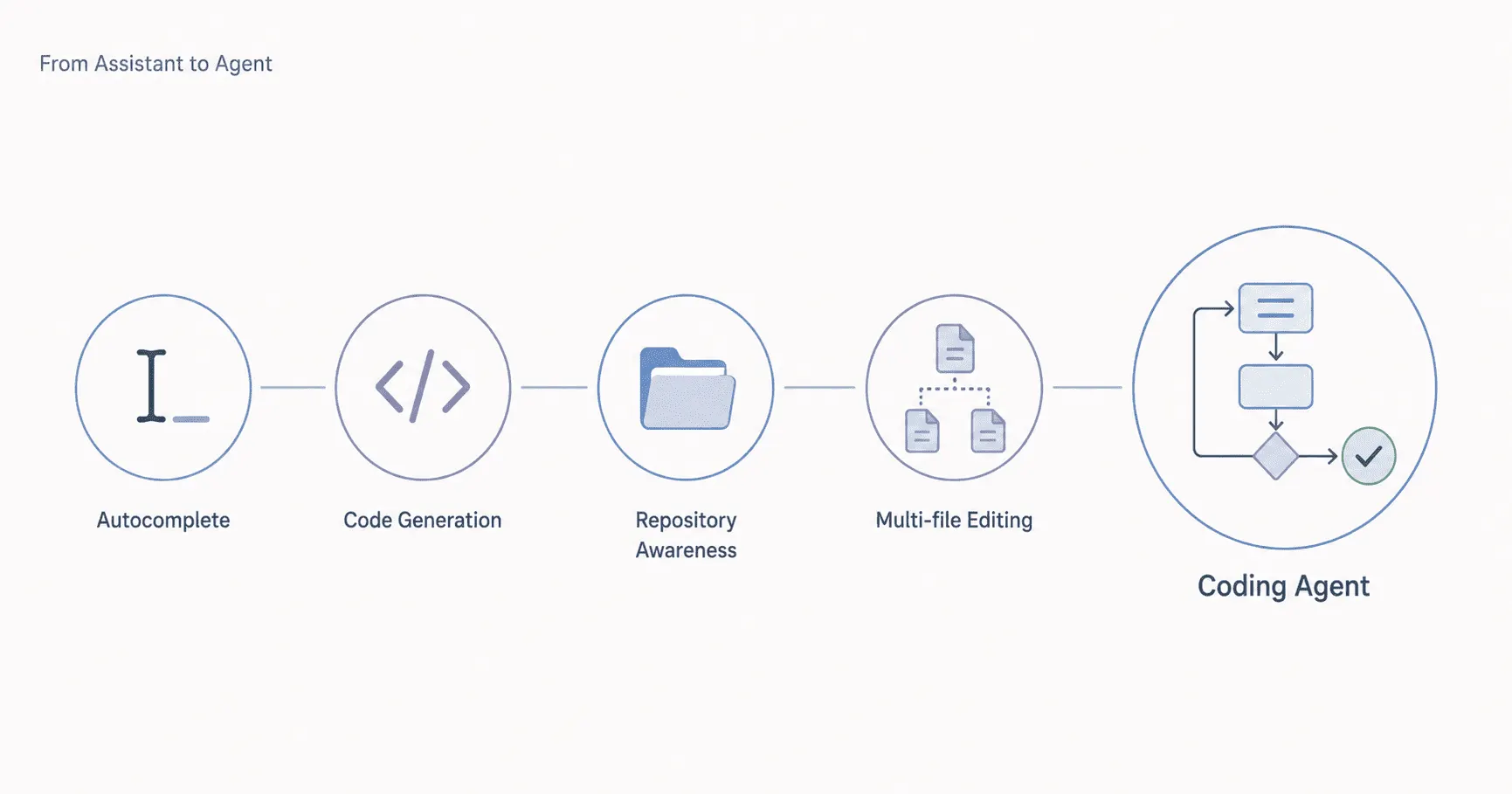
The progression looks roughly like this:
Autocomplete → Code generation → Repository awareness → Multi-file editing → Autonomous task execution
A developer no longer needs to manually copy generated code from a chat window into five different files. Modern agentic tools can increasingly work directly with the repository and development environment.
This doesn’t make developers unnecessary. In many cases, it makes engineering judgment more important. Someone still has to decide whether the implementation fits the architecture, whether authentication has been handled securely, whether a generated database migration could destroy existing data, and whether an agent solved the actual requirement rather than merely producing code that appears to work.
This is why the most useful way to think about AI-assisted software development is not as automated programming, but as a new division of labor. AI can take on more implementation work while developers retain responsibility for architecture, constraints, review and production quality.
The impact is particularly visible among small teams. When one developer can delegate boilerplate, refactoring, documentation and portions of testing to AI, the amount that can be built by a tiny engineering team changes dramatically. That is also one reason solo founders are increasingly building SaaS products without traditional development teams.
The important question for 2026 is therefore no longer, “Can AI write code?” It clearly can. The better question is, “How much of a development task can we safely delegate before human supervision becomes necessary?”
Trend 2: Agentic AI Is Expanding Across the Software Lifecycle
Coding agents are part of a larger shift toward agentic AI. An assistant typically responds to a request. An agent can work toward an objective over several steps, use tools, observe the result of an action and decide what to do next.
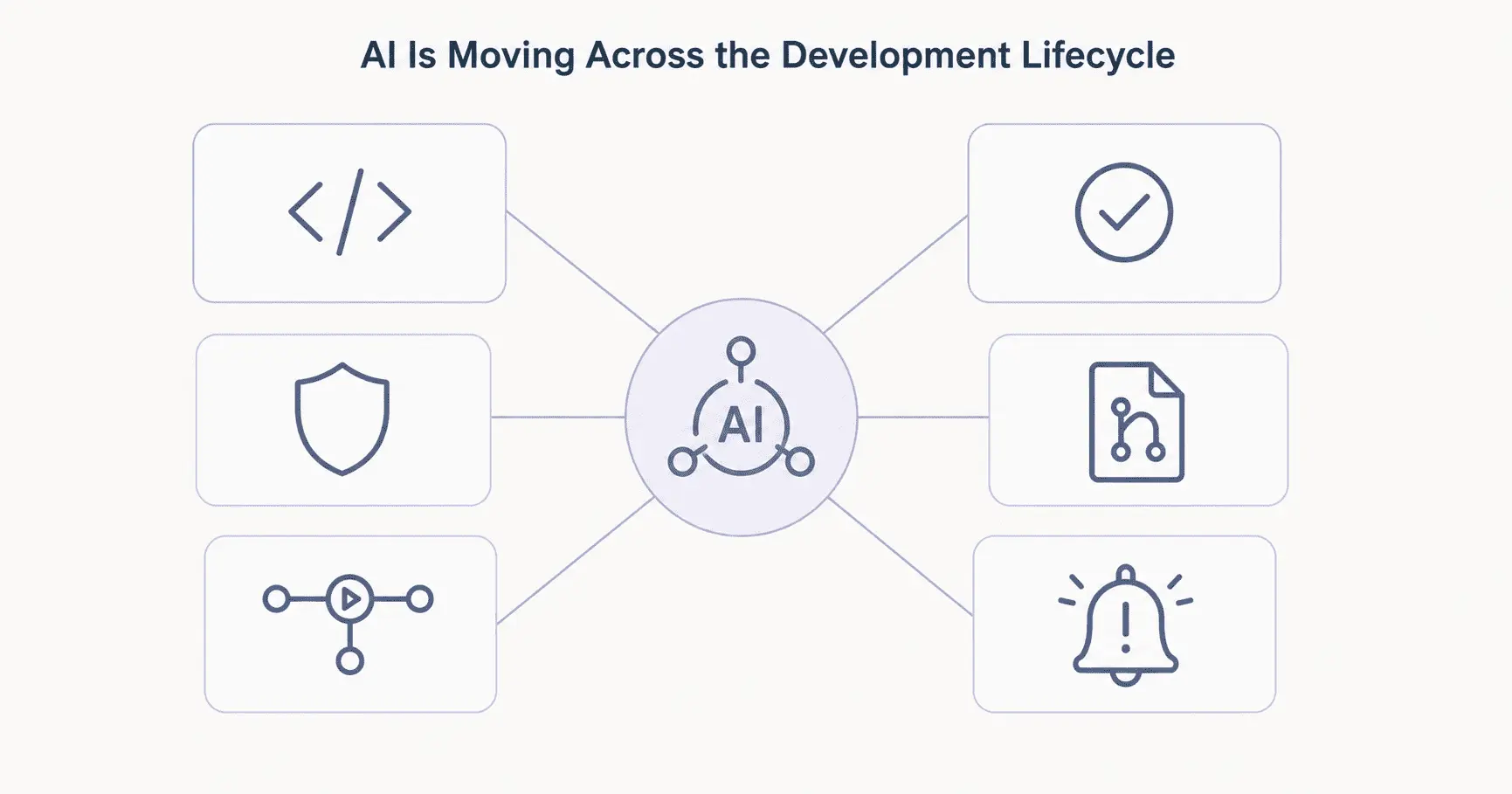
For developers, that opens up much more than code generation. Imagine a bug report arriving with a reproducible error. An AI assistant might suggest five possible causes. An agent could inspect the issue, search the repository, reproduce the error, trace it to a particular component, modify the code, run the relevant tests and prepare a pull request for review.
The same pattern can appear across the software lifecycle. A testing agent could generate edge cases and run them. A review agent could inspect a pull request before a human reviewer opens it. A security agent could look for suspicious dependencies or vulnerable patterns. An incident-response agent could inspect logs and telemetry when an application starts failing.
Google’s 2025 DORA research offers an important perspective on what happens next. Based on research involving nearly 5,000 technology professionals, DORA describes AI as an amplifier of an organization’s existing capabilities.
That’s a useful way for developers to think about agents. A strong engineering team with good tests, clean documentation, sensible architecture and fast feedback loops gives an AI agent a good environment in which to operate. A chaotic codebase with weak tests and undocumented dependencies gives the same agent much less reliable context.
AI can accelerate the system around it, but it doesn’t automatically repair the fundamentals.
That makes seemingly traditional decisions architecture, database design, framework selection and infrastructure just as important in an AI-heavy development environment. If you’re deciding those foundations for a new project, this guide to choosing the right technology stack is a useful starting point.
The best AI workflows in 2026 will probably not be the ones with the most agents. They will be the ones where agents have clear responsibilities, good context and well-defined boundaries.
Trend 3: AI Is Moving Beyond Coding and Into DevOps
Generating an application is not the same as running one. Every developer eventually encounters the gap between “it works on my machine” and “it works reliably for real users.”
A production application has to be built, configured, deployed, monitored, updated and sometimes scaled. When something breaks, someone has to understand what happened.
That operational layer is becoming another major area for AI. We are already seeing AI applied to build configuration, CI/CD troubleshooting, infrastructure provisioning, log analysis, anomaly detection and incident investigation. Instead of only helping developers create software, AI is beginning to help them operate it.
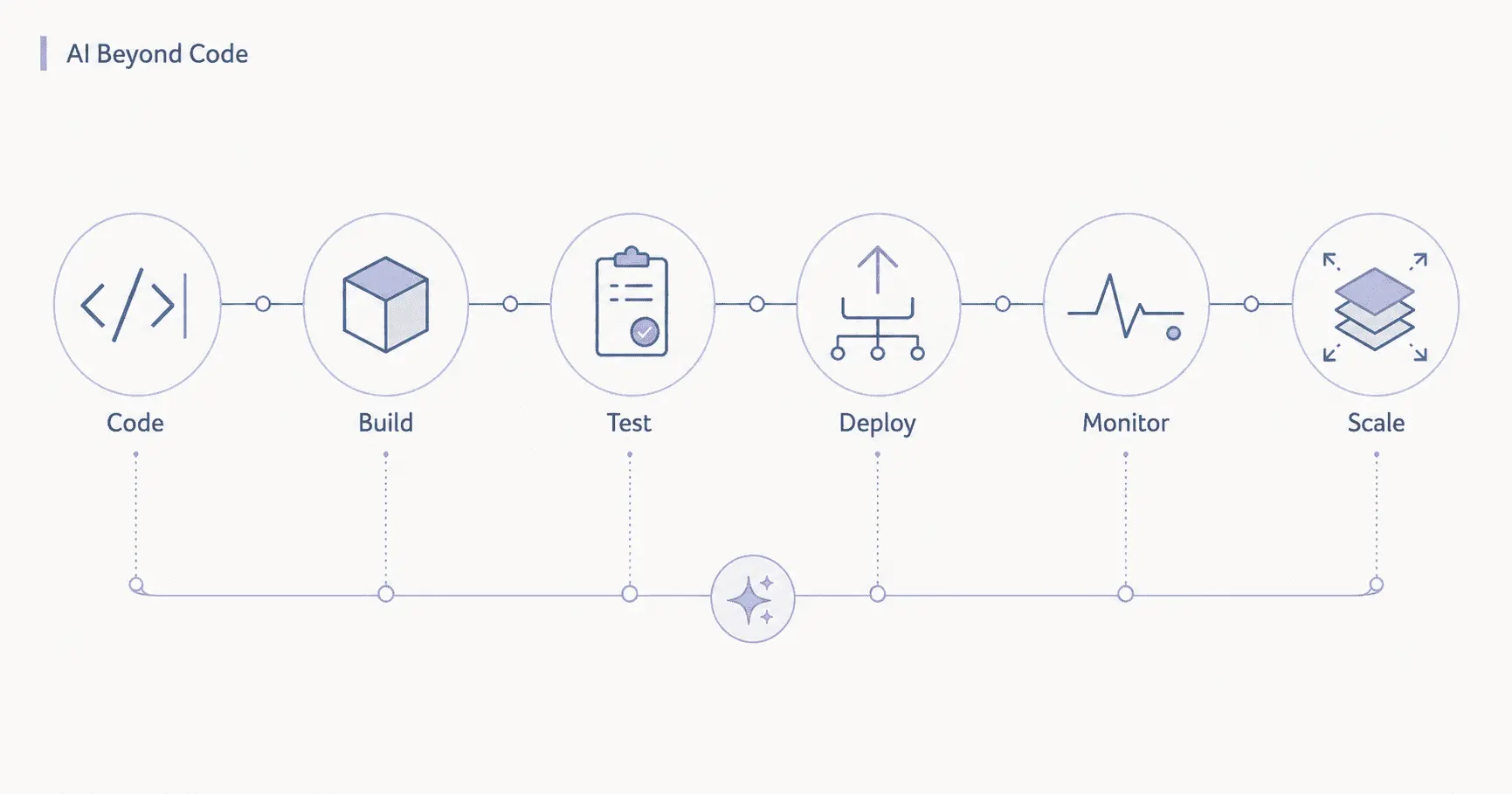
Traditional DevOps automation is largely deterministic: an engineer defines a workflow and the automation executes it. Agentic systems introduce reasoning into that workflow. An agent can potentially inspect an application’s architecture, understand which resources it needs, perform deployment tasks and react to what happens afterward.
The evolution of AI in DevOps could be particularly important for smaller engineering teams, where developers often have to handle application code and infrastructure at the same time.
Google’s DORA research also highlights how important the surrounding platform has become. Its 2025 findings reported that 90% of surveyed organizations had adopted at least one internal platform, while 76% had dedicated platform teams.
The next step is likely to be making those platforms increasingly intelligent.
Instead of developers manually moving between source control, build systems, infrastructure dashboards, monitoring tools and logs, AI agents can potentially carry context across those systems.
That doesn’t mean handing unrestricted production access to an autonomous model. It means moving toward infrastructure where more operational work can be reasoned about and automated while developers remain in control of important decisions.
Trend 4: Generating Code Is Getting Easier. Verifying It Is Not.
AI has created an unusual engineering problem: producing code is becoming much cheaper than proving that the code is correct.
HackerRank’s research found that developers estimate AI already generates 29% of their code on average. Some developers report considerably higher proportions. But an AI model can generate syntactically perfect code that is still wrong.
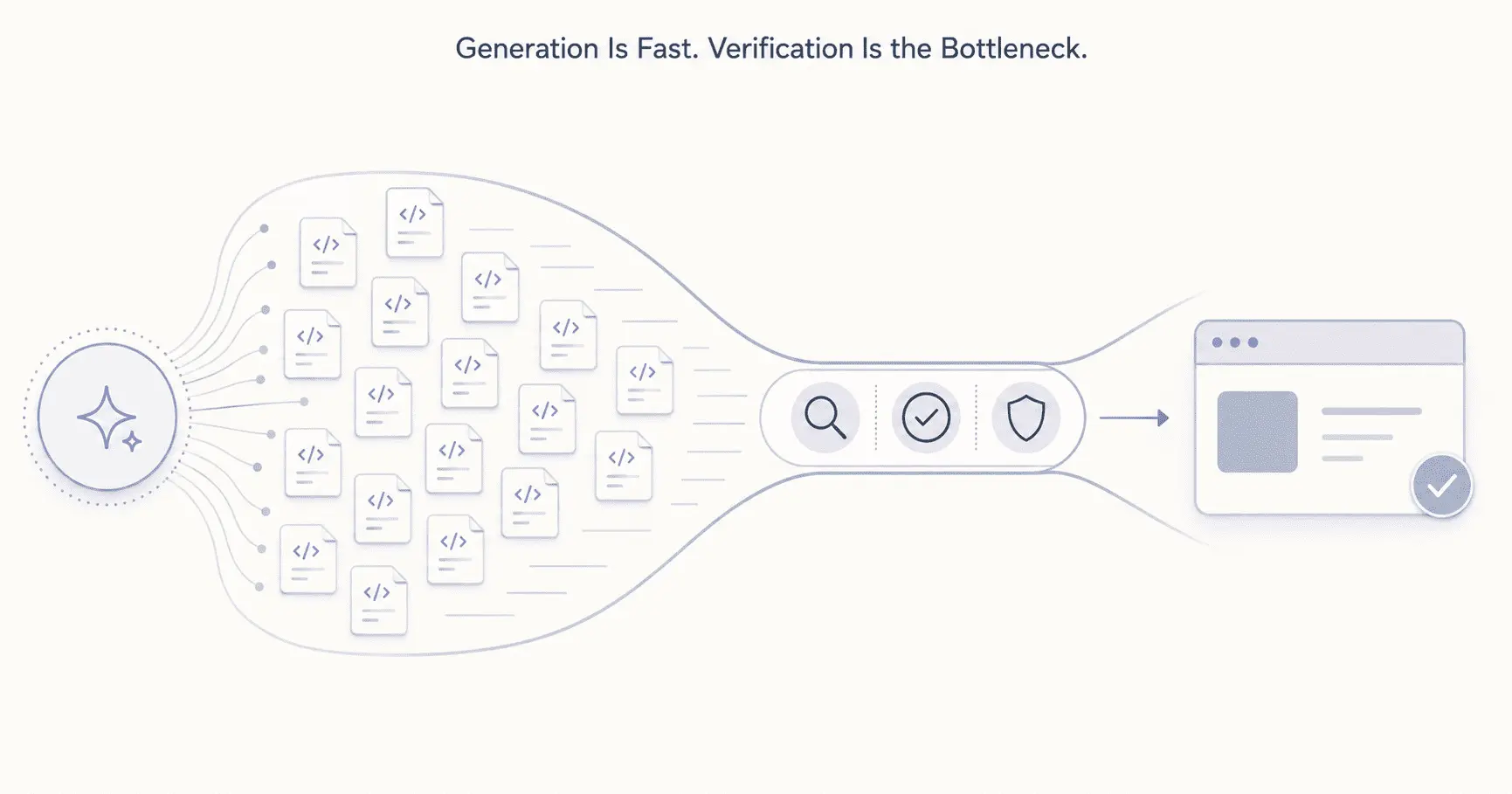
It can misunderstand a business rule, use an outdated API, introduce a dependency that doesn’t exist, overlook an authorization problem or implement a solution that works for the obvious case while failing on edge cases.
That means the bottleneck in software development may gradually move. For decades, writing the implementation was one of the expensive parts of development. If AI dramatically reduces that cost, review, testing and verification become proportionally more important.
This is why developers should be careful with productivity metrics based on generated code. Producing 800 lines in five minutes isn’t valuable if an engineer then spends three hours figuring out why those lines fail in production.
The better workflow is to treat AI-generated code like a contribution from a very fast developer who doesn’t fully understand your product. Review the logic. Run the tests. Inspect dependencies. Check security-sensitive paths. Confirm assumptions.
For teams using AI heavily, a structured process for auditing AI-generated code is becoming less of a nice-to-have and more of an ordinary engineering practice.
In other words, AI may reduce the cost of typing code while increasing the value of knowing whether code should exist in the first place.
Trend 5: Testing and Code Review Are Becoming AI’s Next Big Jobs
The natural response to more AI-generated code is more AI-assisted verification. Testing is particularly well suited to AI because a large amount of testing work is systematic. Given a function and its expected behavior, a model can suggest normal cases, boundary conditions and unusual inputs a developer may not immediately consider.
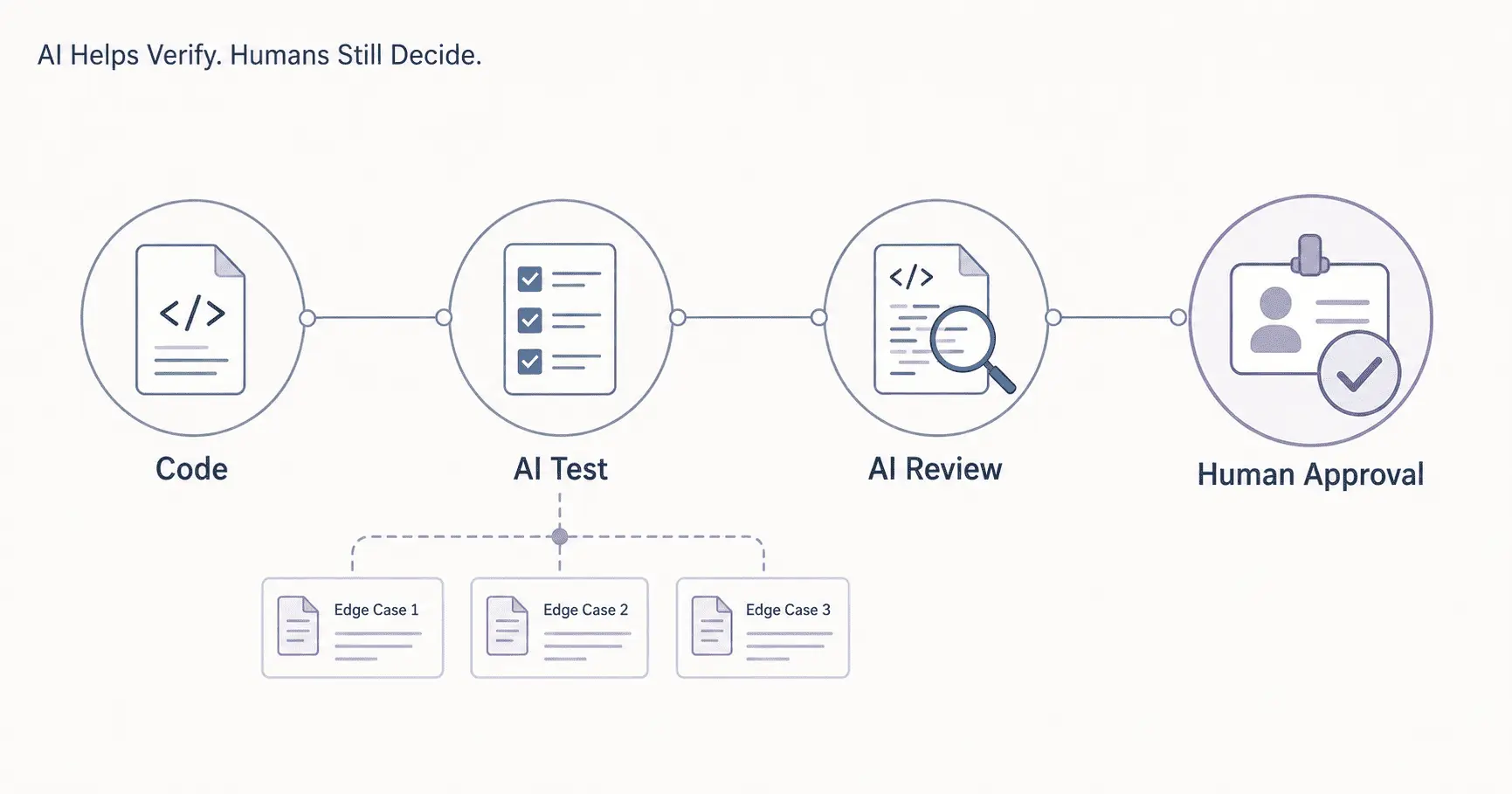
The same applies to code review. AI can summarize a large pull request, identify suspicious changes, point out duplicated logic, explain unfamiliar code and highlight potential vulnerabilities before a human reviewer begins.
This doesn’t eliminate human review. It changes what the reviewer spends time on. Instead of using 20 minutes to understand what a pull request changed, an engineer can start with an AI-generated summary and spend more time asking higher-value questions: Is this architecture sensible? Does this behavior match the product requirement? What happens if this dependency fails?
Over time, we may see a common workflow emerge:
AI generates → AI tests → AI reviews → Human approves
The human remains important because correctness in software isn’t purely technical. A test suite can tell you that the implementation matches its expected behavior. It cannot always tell you that the expected behavior itself is the right product decision.
Trend 6: Developers Are Building AI Tool Stacks
There probably won’t be one AI tool that wins every part of software development. HackerRank found that 61% of developers already use two or more AI tools at work. That makes sense because different models and products are good at different jobs.
A developer might use one AI system for research and architecture questions, an IDE-integrated assistant for everyday coding, a repository-aware agent for larger tasks and another tool for reviewing pull requests.
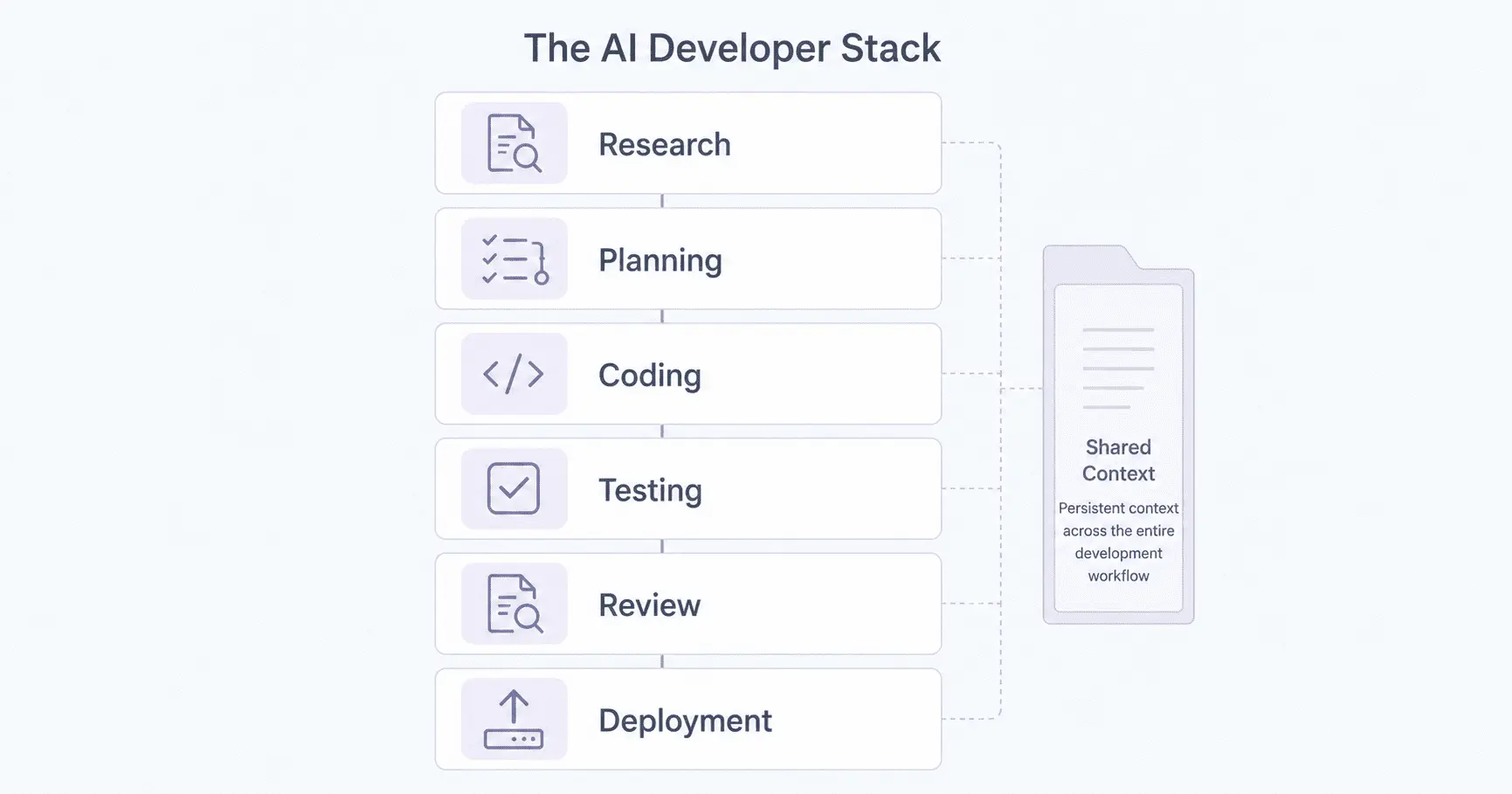
AI is therefore becoming a new layer of the developer stack rather than a single application. This creates a new optimization problem: context.
Switching between five AI tools isn’t useful if each one knows nothing about what happened in the others. The more development becomes agentic, the more valuable persistent project context, documentation and clear specifications become.
Good documentation may actually become more valuable in the AI era, because documentation isn’t only read by humans anymore. It becomes a context that agents can use to understand how a system is supposed to behave.
Trend 7: Vibe Coding Is Growing, but Production Engineering Isn’t Going Away
Few phrases have spread through developer culture as quickly as “vibe coding.” The appeal is obvious. Describe what you want, let AI generate the implementation, run it, paste the errors back into the model and keep iterating until the application works.
For prototypes, experiments and internal tools, this can be incredibly effective. The problem begins when a working prototype is mistaken for production-ready software.
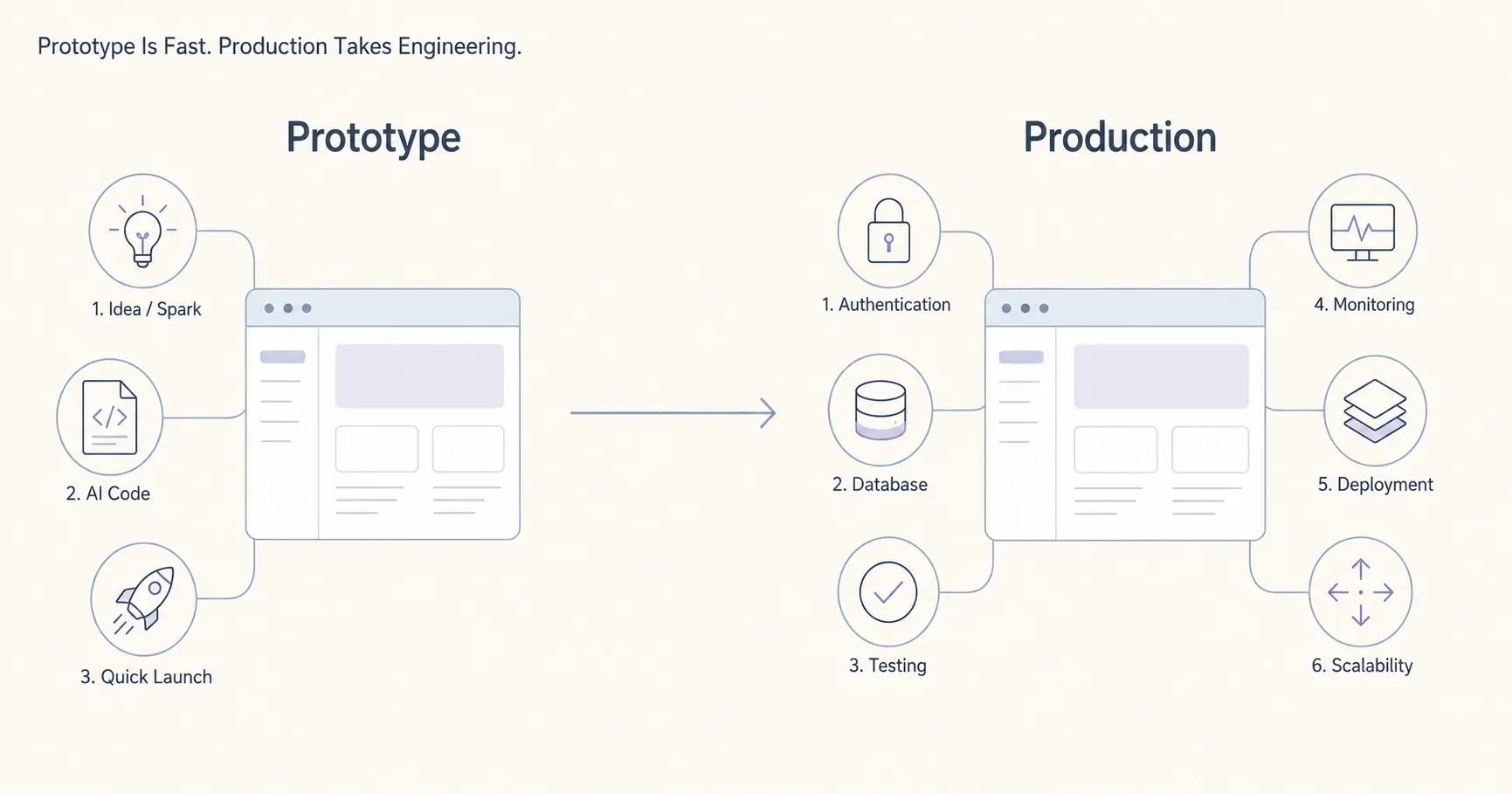
A generated application can look finished while hiding serious problems underneath. Authentication may be implemented incorrectly. Database migrations may be unsafe. Error handling may be incomplete. Secrets may be exposed. Dependencies may have known vulnerabilities. The application may work with ten users and fall apart with ten thousand.
AI has compressed the distance between idea and prototype. It hasn’t eliminated the distance between prototype and reliable production system. That is likely to become one of the defining engineering lessons of 2026.
The developers who thrive won’t necessarily reject vibe coding. They’ll understand when speed is more important than rigor and when the balance needs to reverse.
Use AI aggressively when exploring an idea. Become much more deliberate when users, money, private data and production infrastructure enter the picture.
Trend 8: AI Productivity Is Creating Higher Expectations
AI tools are marketed around productivity, and developers do report real gains. HackerRank found that 85% of developers say AI helps them complete projects faster.
But the same research uncovered a less discussed consequence: 67% say AI has increased pressure to deliver faster.
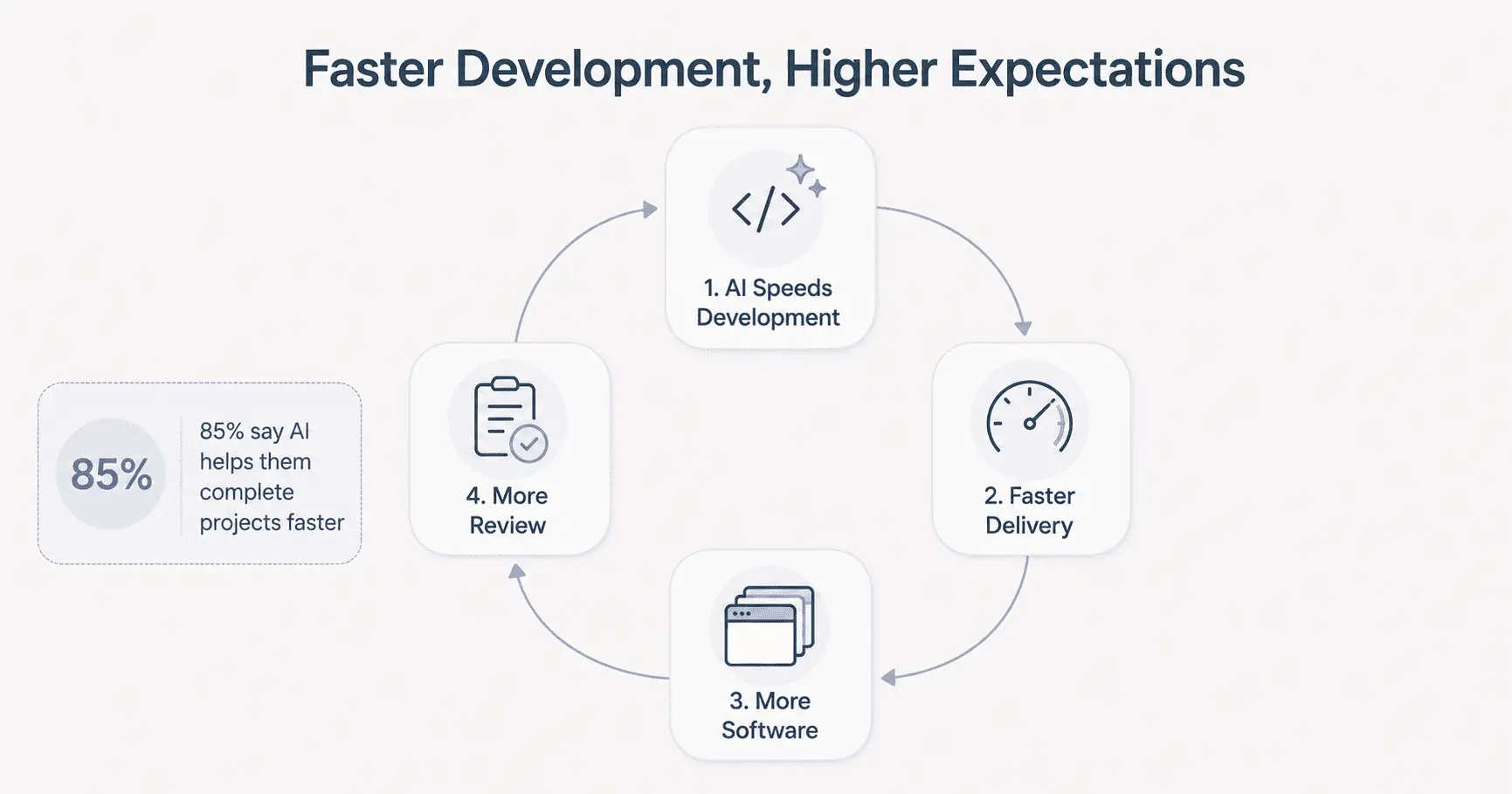
That may be one of the most important developer trends hidden inside the AI boom. When a task that previously took two days can be completed in one, organizations don’t necessarily give developers the second day back. The new speed can become the new expectation.
That creates a cycle: AI accelerates development… Teams expect faster releases… More software gets produced… More software needs review… testing and maintenance. Expectations rise again.
So the productivity conversation needs to mature. The number of lines generated isn’t productivity. Neither is the number of prompts sent or pull requests opened.
Useful measures are closer to outcomes: lead time, defect rate, deployment reliability, recovery time, customer impact and the amount of engineering time spent maintaining what was shipped.
The real promise of AI isn’t simply that developers can produce more software. It is that developers can spend less time on repetitive implementation and more time solving the difficult parts of engineering.
Trend 9: Security Is Becoming an AI Development Skill
Coding agents also create a security problem that ordinary autocomplete tools didn’t have. An autocomplete model suggests text. An agent may be able to read your repository, modify files, execute terminal commands, call external tools or interact with infrastructure.
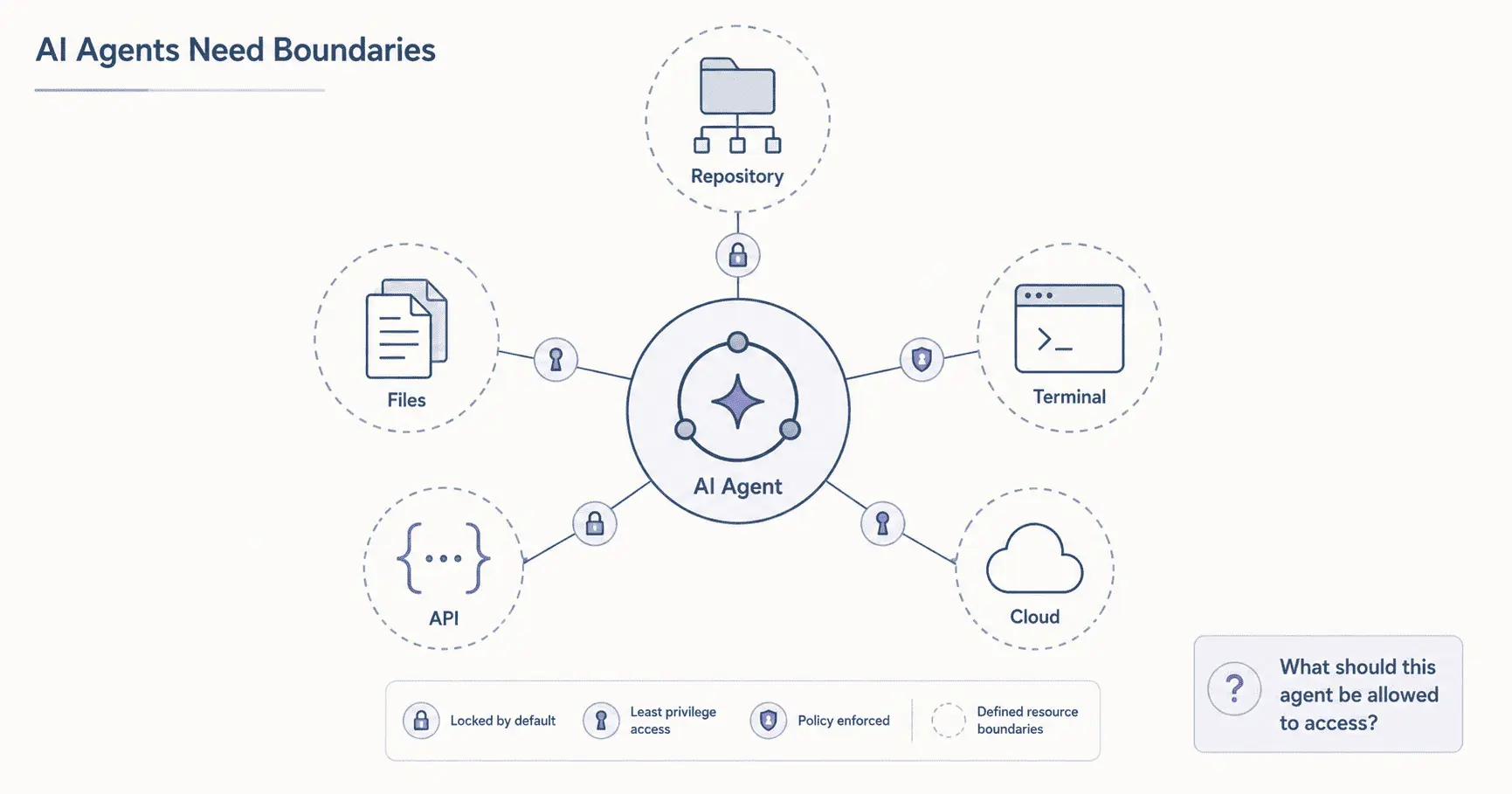
The security question therefore changes from: “Is this generated code safe?”
To: “What is this AI system allowed to see and do?”
Developers need to think carefully about permissions, credentials and data exposure. A code-review agent probably doesn’t need production database access. A documentation agent shouldn’t need deployment permissions. An agent fixing a frontend bug probably doesn’t need every secret in the repository.
There are also less obvious risks. Models can hallucinate package names. AI-generated code can introduce vulnerable dependencies. Proprietary source code may be sent to third-party services without developers fully understanding the data policy.
These aren’t reasons to avoid AI. They’re reasons to treat AI tooling as part of the software supply chain.
Just as developers evaluate libraries, CI/CD services and cloud infrastructure, teams increasingly need to evaluate what their AI tools can access, where data goes and what actions an agent can execute without approval.
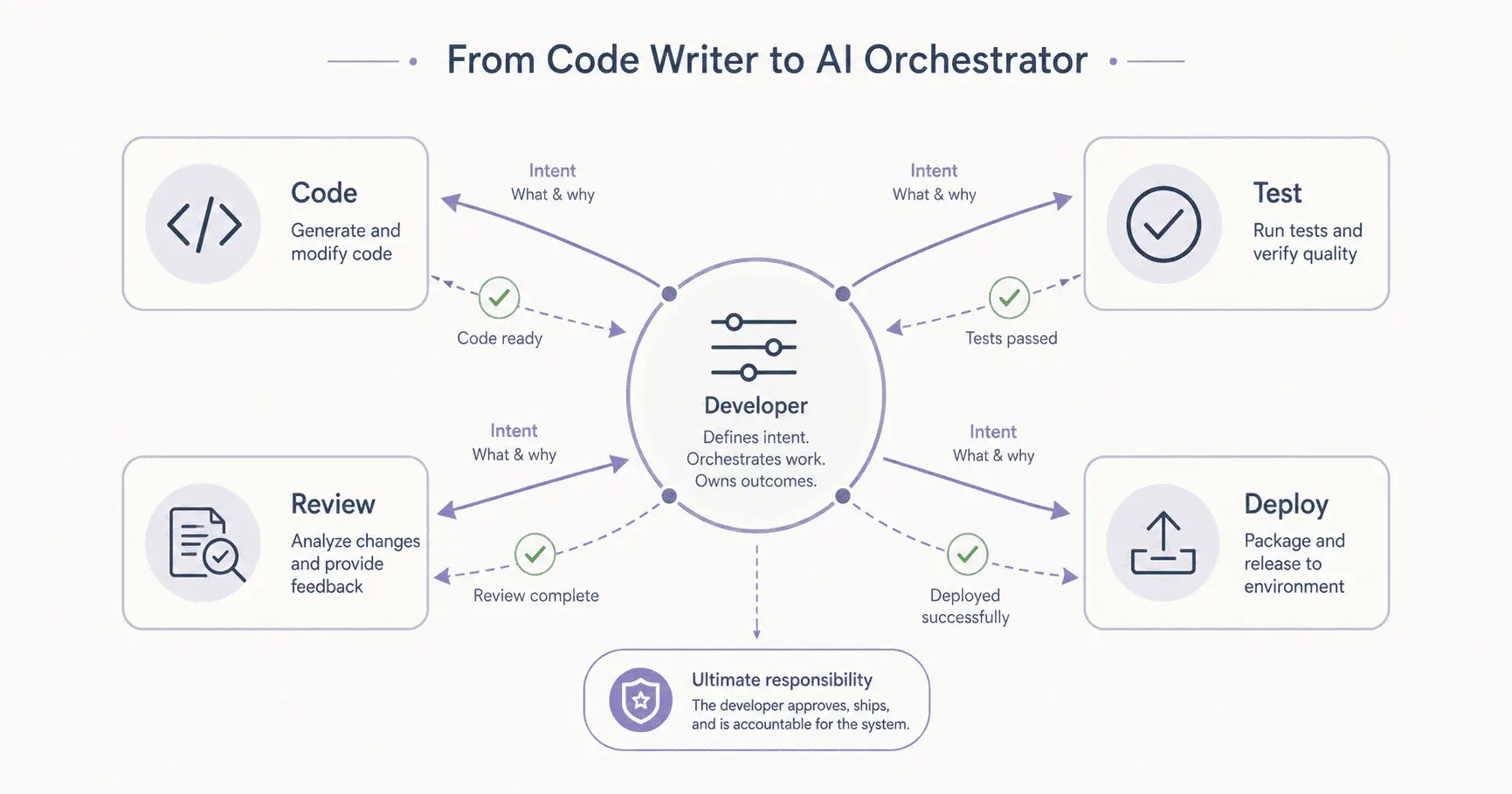
Trend 10: The Developer’s Role Is Shifting From Writer to Orchestrator
The most interesting consequence of all these trends may be what happens to the developer’s job itself. When AI can generate syntax quickly, syntax becomes less valuable as a differentiator.
The valuable skills move upward.
- Can you define the problem clearly?
- Can you design an architecture that won’t collapse six months later?
- Can you give an agent enough context to make good decisions?
- Can you recognize when generated code is subtly wrong?
- Can you decide which tasks are safe to automate and which require human judgment?
This is why “prompt engineering” is too narrow a description of the skill developers need. The emerging skill is closer to AI orchestration.
A developer might break a feature into tasks, delegate implementation to an agent, use another system to generate tests, review the changes personally and then rely on operational automation to get the application into production.
The same pattern is beginning to extend beyond coding through DevOps AI agents, which apply agentic reasoning to deployment and cloud operations.
The developer doesn’t disappear from this system. The developer becomes the person responsible for making sure the system as a whole produces the right result.
What Should Developers Actually Do in 2026?
The worst response to all of this would be trying every AI tool that launches. Developers don’t need 20 subscriptions and a new workflow every week.
They need a few durable habits. Start by learning one AI coding environment properly. Understand how it handles repository context, instructions, tests and larger changes rather than using it only as autocomplete.
Then experiment with agents on bounded tasks. Most importantly, keep strengthening the skills AI doesn’t remove.
- Learn system design.
- Understand databases.
- Learn how applications behave in production.
- Know the basics of security.
- Get good at debugging.
- Understand why an implementation works rather than accepting it because the test turned green.
And treat every AI-generated change as something that needs verification. The developers who get the most from AI will not be the ones who trust it the most. They will be the ones who know when to trust it, when to check it and when to take control themselves.
AI Is Becoming Part of the Developer Stack
The biggest AI trend of 2026 isn’t one model, one editor or one coding agent. It’s that AI is spreading across the entire software development lifecycle.
It started with autocomplete. Then came conversational coding and code generation. Now AI can understand repositories, modify multiple files, run tools, generate tests and increasingly participate in deployment and operations.
The adoption numbers show how quickly the transition is happening. But DORA’s idea of AI as an amplifier may ultimately be the most useful way to understand what happens next.
- AI can amplify a good developer.
- It can amplify a productive team.
- It can amplify good architecture and strong engineering processes.
But it can also amplify technical debt, weak testing and bad decisions. That is why software engineering isn’t becoming less important in the AI era.
The act of manually writing every line of software may become less important. Understanding what should be built, how it should work, how to verify it and how to run it reliably becomes more important than ever.
And that may be the real developer skill of 2026…